Ask a Key Biscayne resident when turtle season happens and most will say spring. That's when the yellow stakes go into the sand at Bill Baggs Cape Florida State Park, when the Village sends its first lighting reminder, when a county commissioner hosts a webinar about nesting habits. By August, most of that has faded from memory. The stakes have been there for months. The news cycle moved on.
That's the wrong moment to stop paying attention. The nests marked back in April and May are not still nests in August. They are hatching, night after night, right now, and the rules that actually protect a hatchling have almost nothing to do with the ones that protect a nesting adult.
Two seasons wearing one name
"Turtle season" gets treated as a single, uniform stretch from spring to fall. It is really two distinct phases stacked on the same calendar, and they ask different things of the people living around the beach.
| Phase | Typical window | What's actually happening |
|---|---|---|
| Nesting | Spring into early summer | Adult females crawl ashore at night to dig and lay eggs, then return to the water |
| Hatching | Early summer into fall | Incubated nests break open and hatchlings dig out, crawl to the water on their own |
Incubation in Miami runs roughly 50 to 90 days from the night a nest is laid, according to the Greater Miami Convention & Visitors Bureau's guide to sea turtle nesting in Miami. Do the math on a nest laid in April or May and the hatch window lands squarely in July, August, and September. That is exactly why Nova Southeastern University's South Florida sea turtle program guide lists supervised hatchling releases at the Crandon Park Visitor and Nature Center on Key Biscayne running Thursday through Saturday, 8:30 to 10:00 p.m., specifically in July through September. The program exists because this is when the actual hatching happens, not the laying.
What the numbers at Bill Baggs say
Bill Baggs Cape Florida State Park typically logs somewhere between 90 and 100 nests across a full season, per Islander News coverage of the start of nesting season. By May 21, 2026, the park had already logged 25 new nests that season. That is roughly a quarter of a typical full-season total, banked before the end of May. Most of those nests are now well inside their hatching window.
Zoom out to the county and the number gets bigger: more than 600 nests are recorded seasonally across Miami-Dade, spread over 19 miles of coastline running from Golden Beach in the north through Miami Beach and down to Key Biscayne. Bill Baggs is a meaningful piece of that total, not a footnote to it, and its nests are hatching on the same clock as everyone else's.
There is a smaller wrinkle worth knowing if you're trying to track this yourself. The Village of Key Biscayne's own survey calendar states that its beaches are monitored from April 1 through October 31. Islander News, citing state and county sources, describes the broader season as running from March 1 through October 31. Both agree on the October 31 close. They differ by a month on the open, which matters if you're the kind of resident who wants to line up your own beach walks with when patrols are officially out.
The rule that reaches your balcony
Here is the part most residents miss once the spring news cycle ends. Bill Baggs' natural, dark beaches are closed to the public between sunset and sunrise during the season under the Village's turtle nest protections, and the Village's own guidance asks anyone with beach furniture, fire pits, or gear left on the sand to pull it up close to the dune line so it doesn't box in a returning female or a crawling hatchling. None of that requires you to leave your unit.
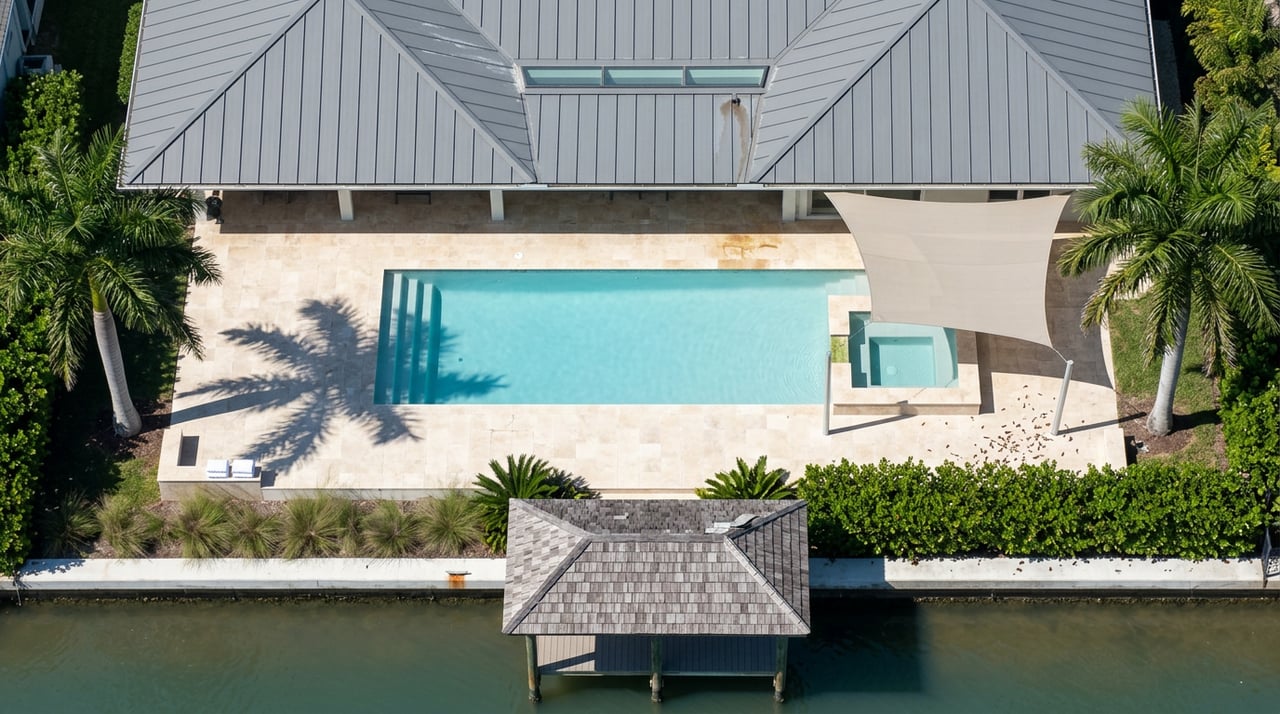
The lighting rule does. Hatchlings navigate by finding the brightest horizon, which on an undeveloped beach is the reflection of open sky on the water. A lit balcony, a bright pool deck, or an uncovered window facing the sand competes with that signal and can turn a hatchling around, sending it toward a parking lot instead of the surf. Miami Beach took this seriously enough to update its own Turtle Nesting Protection Ordinance specifically to cut down on shoreline-facing light, part of a broader Flip the Switch push across the county, per Miami and Beaches' nesting and conservation guide. Florida Park Service biologist Scott Tedford, who researches nesting turtles across the state's southern parks, put the ask plainly: "give nesting adults and their hatchlings space and take care not to disturb them."
For anyone living on or near the water on Key Biscayne through October, that translates to a short, specific list:
- Turn off or shield any exterior light visible from the beach after dark, including landscape lighting, driveway lights, and pool lights
- Close blinds or curtains on beach-facing windows and balconies rather than leaving interior lights uncovered
- Keep beach chairs, umbrellas, and toys pulled back toward the dune line overnight instead of left on open sand
- Skip flash photography if you happen to see a nest or a hatchling
- Keep pets on leash and off the open beach at night during the season
None of these asks are new to Florida coastal living. What's easy to forget is that they matter more in August than they did in April, because August is when the eggs that spring's stakes were protecting are actually breaking open.
Where to see it done right
If you want to see any of this firsthand rather than take it on faith, the Crandon Park Visitor and Nature Center hatchling release program runs Thursday through Saturday evenings, 8:30 to 10:00 p.m., through September, with reservations required. It is run by trained staff, which is the only way to see a release without becoming the disturbance you're trying to avoid.
For residents who want a longer-term connection to the park rather than a single evening, Friends of Cape Florida is the nonprofit that funds Bill Baggs's nest monitoring, beach patrols, and signage, and it runs an Adopt-a-Nest program that channels donations directly back into that work. It is the same group behind the volunteer-run surveys that produce the nest counts cited above.
The rest of the walk, since you're already there
Turtle season aside, Bill Baggs rewards a slow evening visit for reasons that have nothing to do with nests. The park's Robin's Birding Trail and Bill Baggs Lighthouse Loop runs about 3.0 miles through coastal hammock and mangrove, and it's the highest-rated route in the park on AllTrails at 4.6 stars across 779 reviews. The Cape Florida Lighthouse, known locally as El Farito, was first built in 1825 and still lets visitors climb 109 steps to a view 95 feet up, per the park's own manager's message. No Name Harbor, tucked on the bay side of the park, is worth the extra ten minutes if you're bringing a kayak or just want water on the calm side of the island instead of the surf.
Turtle season on Key Biscayne is not really a spring story that fades by summer. It is a two-part story, and the second part, the one that asks something of your own building's lights, is the one running right now.
If you're a longtime Key Biscayne resident weighing a change, whether that means downsizing, moving closer to family, or exploring what else Miami-Dade County has to offer, Irene Dakota has spent two decades working this market and can talk through what your options actually look like. Let's Connect.