Are you rethinking where your warehouse or distribution footprint should live in Miami-Dade? You are not alone. After a surge of new buildings in 2023–2024, rents have cooled from breakneck growth while vacancy edged up, and site selection now hinges on access, resilience, and operating costs. This guide breaks down how the core corridors are shifting, what matters for your use case, and where the near-term opportunities sit so you can plan with confidence. Let’s dive in.
Market snapshot: supply, vacancy, rents
Asking rents countywide are hovering around the mid-teens per square foot, with one data point showing an end-of-2024 average of $16.06 per square foot and 6.2% vacancy according to Savills’ Q4 2024 Miami-Dade industrial report. Vacancy rose from very tight levels as a large wave of new space hit the market. Other sources placed late-2024 vacancy closer to 5.5% to 6.0%, reflecting different methodologies, as summarized in CBRE’s Miami Industrial Figures.
Deliveries were unusually high in 2024, with broker tallies ranging from several million square feet to more than nine million square feet. That surge helped temper rent growth and added optionality for tenants. Many developers have slowed new starts and are leaning toward pre-leased or build-to-suit projects, a trend noted in Bisnow’s market update. The pipeline entering 2025 is thinner, which could tighten conditions again if absorption stays steady.
What sets each corridor apart
Airport West / Doral
If you need fast, reliable access to Miami International Airport cargo, Airport West/Doral is the bullseye. It offers a deep mix of small-bay flex and modern Class A distribution with quick connections to SR-826 and SR-836. Space is highly functional and well-serviced, though infill land is scarce and competition for quality product can be intense. This is a prime fit for air-oriented 3PLs, freight forwarders, and time-sensitive shippers.
Medley / Palmetto Tradeport
Medley acts as Miami-Dade’s off-port backbone. Institutional parks with heavy trailer and yard capacity make it a favorite for maritime carriers and import/export operators. A notable example is the Seaboard Marine renewal at Prologis Palmetto Tradeport for roughly 308,000 square feet, underscoring its role as a near-port distribution hub. If your operation lives on containers, cross-dock moves, and overflow storage, Medley delivers scale and access without sacrificing key highway links.
Hialeah / Miami Airport East and Miami River pockets
Hialeah and Miami Airport East historically lean into produce, grocery distribution, and refrigerated logistics. You will find a high concentration of cold storage and small-bay sites, plus specialty logistics and marine-related users along the Miami River. Investors have been active around mission-critical cold assets here, as seen in recent cold storage sale-leaseback coverage. Users who need power, redundancy, and temperature control should keep this corridor on the shortlist.
North/NW Dade and Miami Lakes / Opa-Locka
North Dade submarkets, including Miami Lakes and areas around Opa-Locka, tend to offer larger land footprints and more cost-effective sites than Airport West. Tenants willing to trade a few extra drive minutes can secure bigger boxes and plan for expansion. This is attractive for regional distribution and light manufacturing where lower basis and flexibility can outweigh the premium of core infill.
South Dade (Kendall / Homestead fringe)
South Dade holds some of the county’s largest contiguous parcels, which is valuable for master-planned logistics. The tradeoff is longer drive times to PortMiami and MIA, plus a more complex entitlement environment tied to local infrastructure and growth boundary considerations. When approvals, roadway capacity, and use cases align, the scale opportunity is real. For very large-format users, this is where you can plan a multi-phase strategy.
Product types and demand shaping the map
E-commerce and 3PL densification
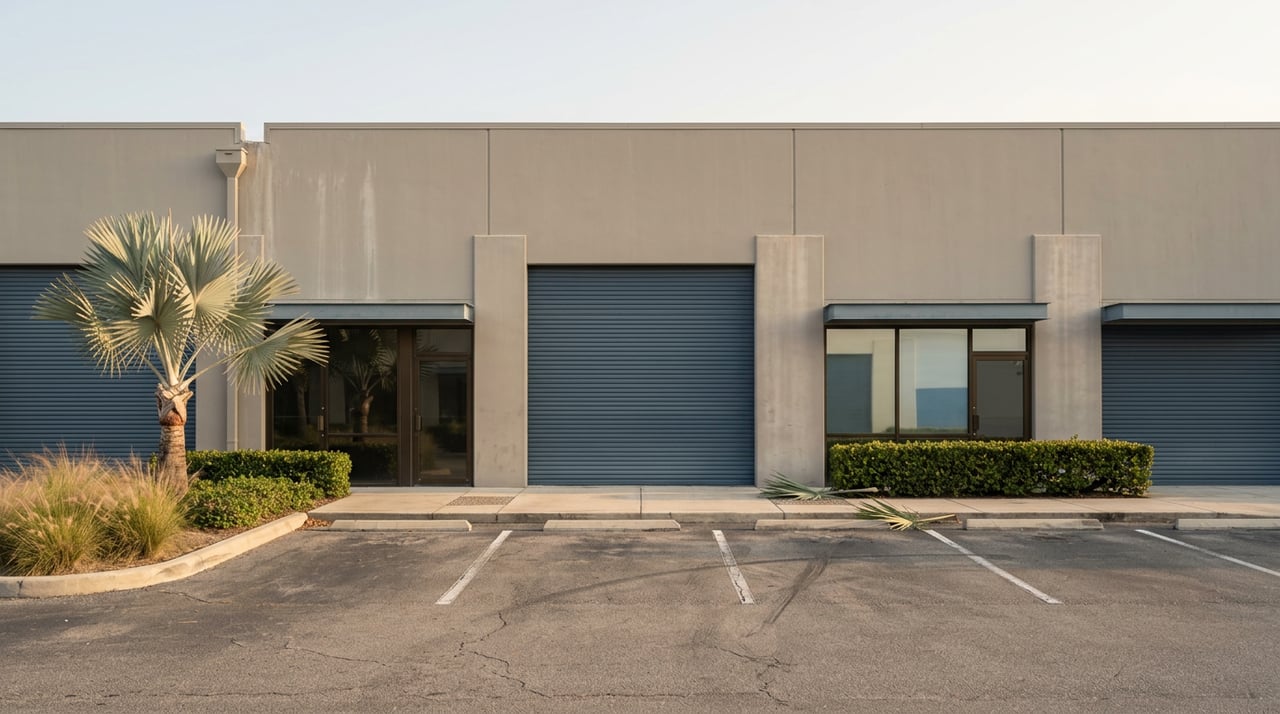
3PLs and retailers continue to densify networks to shorten delivery windows and manage inventory more precisely. Mid-sized Class A distribution in the 50,000 to 250,000 square foot range remains active, and strategic build-to-suit deals still land in top corridors, as outlined in JLL’s Q1 2025 industrial dynamics. If you are a growing operator, this is the size band to watch for flexibility and speed to occupancy.
Cold chain and perishables
Miami is a key gateway for perishables and regional food distribution, so cold storage is a standout category. Expect higher technical specs: heavier power, backup systems, dock configurations designed for temperature control, and floor loading that can support racking and equipment. Recent transactions and investor interest in Hialeah and Medley support the thesis that cold is core to Miami-Dade’s industrial base, reinforced by local reporting on cold storage deals.
Off-port, near-port distribution
With PortMiami and MIA as anchors, importers, exporters, and consolidators keep distribution close to intermodal links. Off-port inventory, cross-dock functionality, and trailer storage are in steady demand. Parks in Medley and Airport West are built for these flows, a trend illustrated by the Seaboard Marine renewal in Medley.
Last-mile and micro-warehouses
Population growth and strong daytime activity support smaller, urban last-mile sites. Flexible micro-warehouses near core neighborhoods can sharpen delivery performance even as large regional boxes handle the bulk of volume. For many users, a two-tier strategy works: a main DC in Medley or North Dade paired with small-bay last-mile space closer to dense consumer nodes, consistent with patterns noted in JLL’s national research.
Development trends and what it means for pricing
Speculative deliveries in 2024 reset the near-term balance of supply and demand. Many developers are now favoring pre-leased or build-to-suit projects while they work through new inventory, as covered by Bisnow’s update. Translation for occupiers: you have more negotiation room on near-term availabilities, especially for midsize spaces in non-core pockets. For investors, well-located, modern assets with the right specs still earn attention, but underwriting is sharper on power, yard, and tenant credit.
Modern specs continue to set the pace. Clear heights of roughly 28 to 36 feet, robust truck courts, abundant dock doors, and flexible office or automation areas are in focus. Cold storage draws special scrutiny on power, backup, and capex reserves, themes reinforced in JLL’s research. While multi-story logistics has emerged in other land-constrained cities, Miami currently leans toward horizontal parks, with higher-density concepts likely only in the tightest infill nodes if land pricing pushes the economics.
Risk, resilience, and underwriting changes
Elevation and flood risk are now part of the first conversation, not the last. Miami-Dade has adopted resilience planning that informs public projects and should inform your site strategy, including review of FEMA flood zones and local Adaptation Action Areas. You can find context in Miami-Dade County’s Sea Level Rise Strategy updates. For any candidate site, budget for mitigation where needed, such as slab elevation, pump systems, or floodproofing.
Insurance costs remain a material line item. Underwriting constraints and higher premiums have moderated but still trend above national averages, particularly for special-use assets like cold storage or low-elevation properties. Review current carriers’ capacity and reinsurance considerations, and plan for capital projects that can improve your risk profile. For a broad view of market forces, see this 2025 commercial property insurance outlook.
Truck routing and congestion are also practical constraints. Proximity to SR-826, SR-836, the Turnpike, and I-95 can swing operating costs. Run drive-time studies to MIA cargo, PortMiami, and customer clusters before you get deep into pricing.
Site-selection checklist: Miami-Dade industrial
Use this quick filter when you evaluate buildings or land:
- Access and drive time: minutes to MIA cargo, PortMiami, and SR-826/SR-836/I-95/Florida Turnpike.
- Yard and staging: trailer parking, circulation, cross-dock potential if needed.
- Building specs: clear height, dock count, column spacing, floor load, and power capacity. Cold storage needs redundancy.
- Elevation and flood exposure: FEMA zone, local Adaptation Action Areas, and resilience requirements found in county planning documents. Budget for mitigation.
- Entitlements and zoning: confirm industrial use, truck routing, and any pending land-use reviews that could delay timelines.
- Labor and services: assess nearby labor pools, transit access, and support vendors.
- Tenant profile fit: match your use type to corridor strengths. Example: Hialeah for cold chain, Doral for air access, Medley for off-port capacity.
How to position your next move
If you are an occupier in the 50,000 to 250,000 square foot range, today’s market gives you options without sacrificing speed to move-in. Focus on function and total cost to operate, not just face rent. Shortlist two or three corridors that fit your logistics model, then use competition to secure the right TI package, timeline, and ramp-up provisions.
For investors, the near-term thesis is selective and specification-driven. Favor modern assets with the yard, power, and dock packages tenants want, and weigh elevation, insurance, and resilience upgrades in your pro forma. Off-port parks with trailer capacity and air-proximate assets that appeal to 3PLs stand out, while cold storage requires deeper technical diligence but can offer durable demand.
If you want to map a search across Miami-Dade’s evolving corridors or pressure-test a site against your logistics plan, I am here to help. As a South Florida REALTOR and Senior Sales & Leasing Advisor, I work across new-construction warehouses, land, off-market sourcing, and leasing advisory. Let’s structure a plan that aligns with your timeline, budget, and growth targets.
Ready to explore your options or get a custom corridor brief? Connect with Irene Dakota to start a focused search.
FAQs
What are current Miami-Dade industrial rents and vacancy?
- Recent reports cite an average asking rent near $16 per square foot with vacancy around 5.5% to 6.2%, reflecting new deliveries and slower rent growth.
Which Miami-Dade corridor is best for air cargo users?
- Airport West/Doral offers the fastest, most reliable access to Miami International Airport cargo with a deep inventory of Class A distribution and flex.
Where should off-port and ocean-focused operators look first?
- Medley is a strong fit with institutional parks, abundant yard space, and recent large renewals by ocean-linked users.
What makes Hialeah/Miami Airport East a cold storage hub?
- The corridor has a concentration of refrigerated facilities and investor interest in mission-critical cold assets serving perishables and grocery distribution.
How are resilience and insurance shaping industrial underwriting?
- Elevation, flood risk, and mitigation plans now sit at the top of diligence, while insurance premiums and carrier capacity factor into operating costs and capex.