If you are about to sign a warehouse lease in Broward, the biggest risk is not always the rent. It is signing first and discovering later that the use, permits, or move-in timeline do not match how your business actually operates. A little due diligence up front can save you time, money, and major frustration. Here is the checklist you should work through before you commit to a warehouse space in Broward County. Let’s dive in.
Start with zoning first
Before you compare rental rates, confirm that your business can legally operate in the space. In Broward County, industrial uses may include manufacturing, wholesaling, storage, and warehouse uses in commerce areas, but the local government decides the exact permitted use and the exact zoning boundaries. That means a warehouse that looks right for your business still may need local approval depending on the address and proposed use.
You also need to know which jurisdiction controls the property. Broward County zoning staff handles properties in the Broward Municipal Services District, which covers unincorporated areas. If the property is inside a city such as Fort Lauderdale, Pompano Beach, or Deerfield Beach, you need to confirm zoning and use rules with that municipality.
Zoning questions to ask
Before signing, confirm all of the following:
- The current zoning district
- The future land use designation
- Whether your use is permitted by right or needs special approval
- Whether there are restrictions on outside storage
- Whether truck traffic, loading, signage, or hours are limited
- Whether hazardous materials are restricted
- Whether a written zoning verification is available
In Fort Lauderdale, the city advises buyers and tenants to confirm the business is allowed at the location before committing to a lease. In Pompano Beach, zoning approval is required before a Business Tax Receipt is issued, and that Zoning Use Certificate approval is valid for only 60 days. In Deerfield Beach, you need a Certificate of Use before you occupy or do business in the space.
Do not confuse a tax receipt with compliance
This is an easy mistake to make. Broward County warns that a Business Tax Receipt is not proof that a business is operating in compliance with local laws. If you rely on that alone, you could still face problems later with use approval, inspections, or occupancy.
For properties in the Broward Municipal Services District, a new tenant or a change of occupancy in an industrial, office, retail, or commercial property must first obtain a certificate showing compliance with the Florida Building Code, Broward County Zoning Code, and the Fire Marshal’s office. That is a key item to verify before you sign.
Read every money term carefully
Warehouse lease costs rarely stop at base rent. What matters is the full monthly number and how that number can change over time. If you do not review the expense structure line by line, you may underestimate the true occupancy cost.
Ask the landlord to break down every recurring charge. You want to know how common area maintenance is calculated, whether taxes and insurance are passed through, how utilities and trash are billed, and whether any administrative fees apply.
Financial items to review
Use this lease checklist before you commit:
- Base rent
- Common area maintenance charges
- Operating expense pass-throughs
- Real estate tax charges
- Insurance charges
- Utility billing method
- Trash or waste charges
- Administrative fees
- Annual rent increase language
- Reconciliation rights for operating expenses
A smart underwriting habit is to request the last operating expense reconciliation, the current budget, and a sample of the landlord’s annual increase language. Those three items can tell you a lot about whether the space fits your budget now and later.
Plan your renewal and exit now
It is much easier to negotiate flexibility before signing than after your business is already in place. Review the notice deadline for renewal, how notice must be delivered, and how rent is calculated during any option term. Also check default cure periods, assignment and sublease rights, relocation rights, restoration obligations, and any exclusives or use restrictions.
These terms matter because your needs may change. You may outgrow the space, sell the business, or need more time at the end of the lease. A warehouse lease should support those possibilities, not box you in.
Make sure the space works in real life
A warehouse can look fine on a flyer and still fail your day-to-day operations. The right lease starts with the right physical fit. That means testing the building against how your team, equipment, deliveries, and inventory actually move.
Look at the space with your operations in mind, not just square footage. A cheaper warehouse is not a better deal if it slows your workflow or requires costly changes just to function.
Physical checklist for warehouse users
Confirm these basics before signing:
- Ceiling height
- Clear span layout
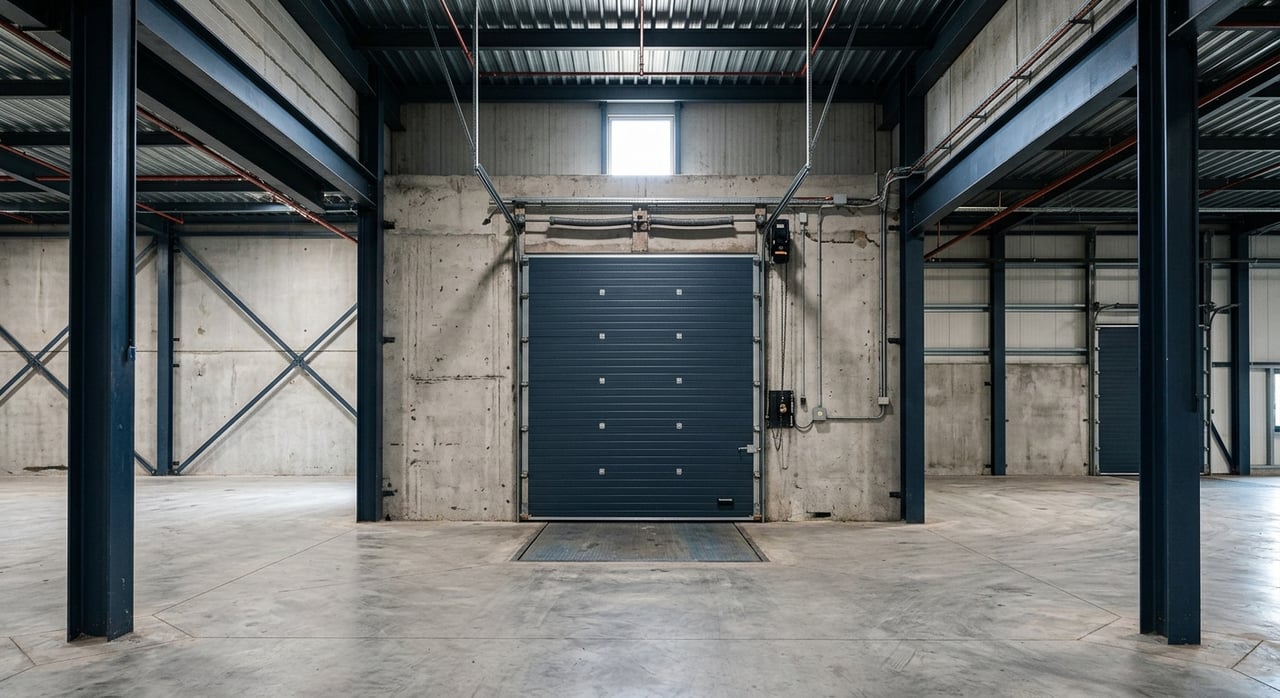
- Dock doors
- Grade-level access
- Truck court depth
- Turning radius for deliveries
- Floor load capacity
- Electrical power
- HVAC setup
- Restroom count
- Office-to-warehouse ratio
- Waste handling setup
- Parking count for staff, vendors, and customers
If your business depends on regular truck access, loading efficiency, or showroom use, these details can directly affect revenue and labor costs. It is better to identify a mismatch before lease execution than after move-in.
Review accessibility requirements
If the property includes parking lots or garages, accessible parking spaces, accessible routes to the entrance, and required dimensions and signage should be part of your review. The ADA also treats warehouses and factories as commercial facilities, and newly constructed or altered commercial facilities must comply with ADA Standards.
If the space includes a showroom, reception area, lobby, or another public-facing component, both landlord and tenant can assign ADA responsibilities in the lease. Even so, both may still remain liable for compliance. That makes it important to address accessibility clearly before buildout starts.
Check flood exposure too
Flood risk is another practical issue in Broward, especially if you plan to store inventory or equipment on the ground floor. Broward County encourages businesses and residents to review flood zones so they can better understand risk and protective steps. That review can help you think through storage layout, insurance planning, and resilience measures before you commit.
Map the permit path before signing
If your warehouse needs any work before move-in, you need a clear permit plan. In Broward County and in cities that contract with the county, permits are required for many kinds of construction, remodeling, and repair work, including commercial warehouse work. Unpermitted work can lead to fines and may require work to be approved later by an engineer or even torn out and redone.
That is why the permit timeline should be part of your lease review, not an afterthought. If the landlord promises improvements or you plan tenant improvements, confirm the process in writing before signing.
Buildout questions to answer early
Before you sign, ask:
- Who is pulling the permits
- Who is paying permit fees
- Who is paying inspection fees
- Whether contractor registration is required
- Which improvements need separate permits
- How long inspections are likely to take
- What has to happen before final closeout
- When the space can legally be occupied
Broward County notes that separate permits may be required for electrical work, plumbing, signs, heaters, tanks, and air conditioners. For projects over $5,000, a current Notice of Commencement is required before construction begins, and a certified copy must be submitted before the first inspection. A Certificate of Occupancy is issued only after final inspections, approvals, and fee payments are complete.
City rules can change the timeline
Jurisdiction matters here too. Fort Lauderdale processes permit applications only for addresses inside city boundaries and uses LauderBuild for online permitting. The city also notes that permit applications submitted after December 31, 2023 are subject to the 2023 Florida Building Code.
Deerfield Beach requires businesses to obtain a Certificate of Use before occupying or doing business in the space, and those approvals require inspections by Zoning, Building, and the Fire Marshal. Pompano Beach also requires zoning approval before a Business Tax Receipt is issued. In short, your move-in schedule depends on where the property sits and what work the space needs.
Coordinate your advisors before you sign
A warehouse lease is not just a real estate decision. It is also a legal, operational, and financial decision. The cleanest transactions usually happen when your lease terms, buildout scope, permits, and occupancy path are all lined up before the signature.
For Broward tenants, it is wise to have a commercial real estate attorney review the use language, renewal clauses, default provisions, restoration obligations, assignment and sublease rights, and any guaranties. A CPA can help model pass-through costs, and a contractor or engineer can confirm whether the space can actually be delivered the way the lease assumes.
Use local resources when questions come up
If you are evaluating a Fort Lauderdale space that needs work before move-in, the city’s Permit Solutions Team can help with zoning, permitting, business tax, and construction questions. For properties in the Broward Municipal Services District, Broward County zoning staff is a local point of contact. For city properties, go directly to the municipal zoning office.
This kind of local coordination matters in Broward because small details can affect timing in a big way. The more clearly you confirm the use, permits, occupancy requirements, and cash flow assumptions, the fewer surprises you will face after lease execution.
A simple Broward lease checklist
If you want a practical way to pressure-test a warehouse lease, focus on four things first:
- Confirm the legal use
- Confirm the permit path
- Confirm the certificate or occupancy path
- Confirm the real monthly cost
If any of those pieces are still unclear, you are probably not ready to sign. Slowing down before the lease is often the fastest way to avoid expensive delays later.
If you are weighing warehouse options in Broward, I can help you look beyond the listing and focus on the details that affect timing, cost, and day-to-day function. When you are ready to discuss your next move, connect with Irene Dakota.
FAQs
What should you check before signing a warehouse lease in Broward?
- You should confirm zoning, legal use, permit requirements, occupancy approvals, physical fit, flood exposure, and the full lease cost before signing.
Does Broward County zoning apply to every warehouse property in Broward?
- No. Broward County zoning staff handles properties in the Broward Municipal Services District, while properties inside city limits must be reviewed with that city’s zoning department.
Is a Business Tax Receipt enough to prove a Broward warehouse is compliant?
- No. Broward County states that a Business Tax Receipt is not proof that the business is operating in compliance with local laws.
What lease costs matter beyond base rent for a Broward warehouse?
- You should review common area maintenance, operating expenses, taxes, insurance, utilities, trash, admin fees, annual increases, and reconciliation rights.
What building features should you review for a Broward warehouse lease?
- Key items include ceiling height, dock access, grade-level doors, truck court depth, turning radius, floor load, power, HVAC, restrooms, office ratio, waste handling, and parking.
What approvals may be needed before occupying a warehouse in Fort Lauderdale, Pompano Beach, or Deerfield Beach?
- Depending on the city and the property, you may need zoning approval, a Business Tax License or Business Tax Receipt step, a Certificate of Use, inspections, and final occupancy approvals before operating in the space.